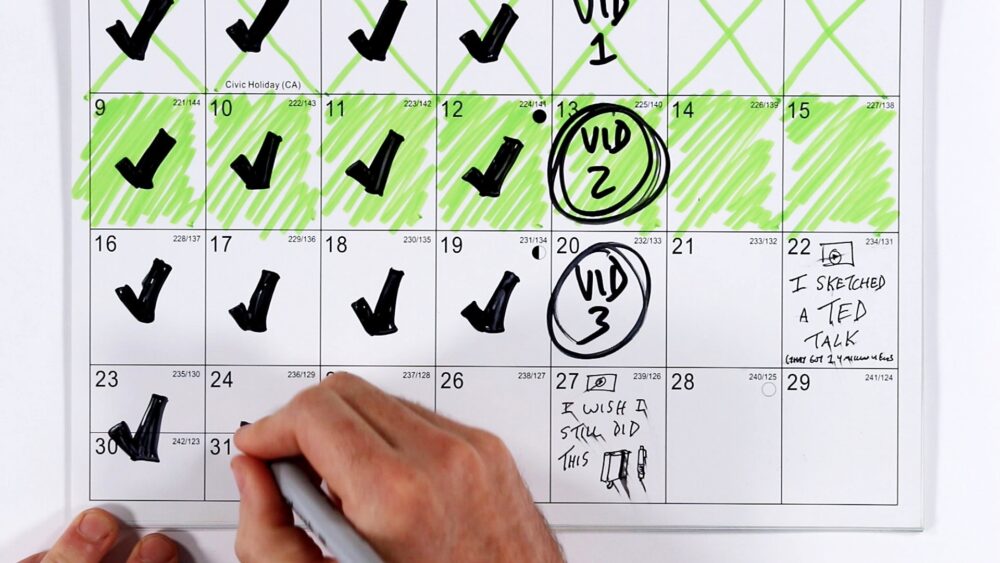
I’ve set a big goal for myself for 2027: a summer sabbatical. I’d like to step away from work for about three months while my twin boys are out of school. In the video above, I walk through the simple visual tool I’m using to make that happen: a wall calendar, marked up with my own structure.
Where the idea came from
At the start of 2026 I read Sustainable Ambition, and one idea that stuck with me was the pause and break blueprint: intentionally creating chances to slow down on different timescales, from daily and weekly to monthly, quarterly, and annually. When I reflected on it, I realized I’m pretty good at the small breaks (short pauses during the workday, time off on weekends) but not great at the longer ones.
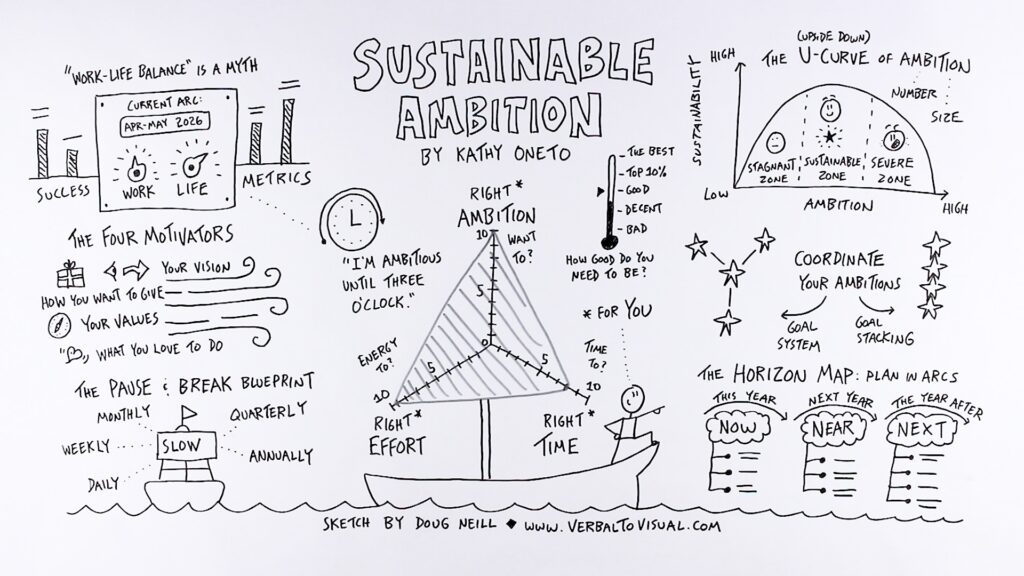
That got me thinking about an annual break, timed for the season when it would help most. This past summer showed me how much it takes to fit in two full-time jobs alongside two very energetic boys, with my wife still working full time. Summer is the obvious time to turn down the work dial and turn up the life dial.
Around the same time, I was reading Cal Newport’s Slow Productivity, which talks about working at a natural pace and embracing seasonality. If the sabbatical goes well in 2027, maybe it becomes something I repeat every year.
Choosing the calendar (and the right pen)
I picked up two calendars that run from mid-2026 through the end of 2027, and chose the national parks one because it felt more aspirational. It’s easy to imagine that sabbatical summer including a visit to a park or two. (September happens to feature Zion, my favorite national park so far.)
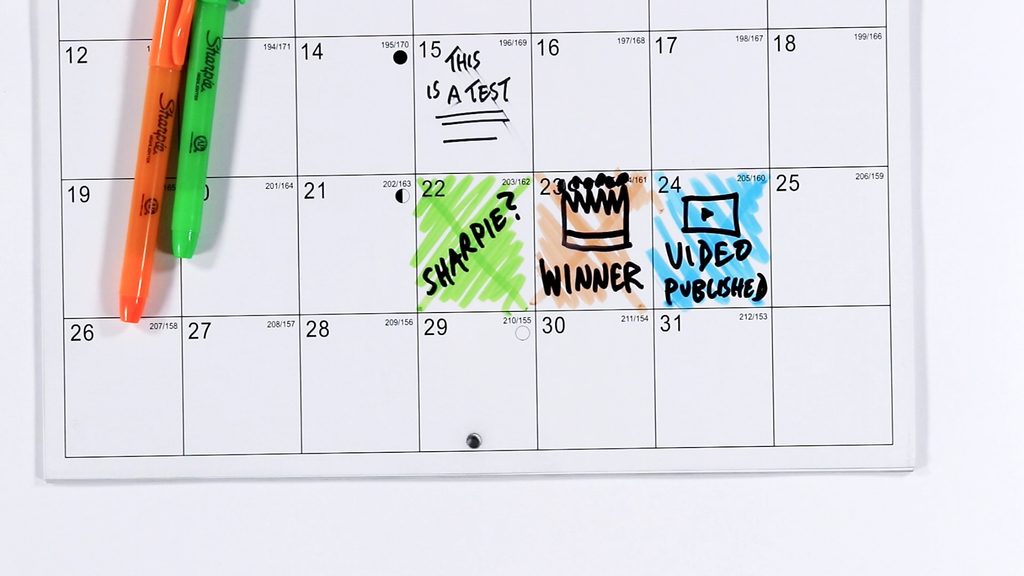
The glossy pages took some testing. My usual Pentel pens smeared, but a Sharpie held up well. I added highlighters for marking off days as they pass, since they don’t cover up what’s written underneath.
Working ahead on weekly videos
The practical purpose of this calendar is to help me publish a new YouTube video every Thursday through the rest of 2026 and all of 2027. The goal is to work ahead rather than finishing each video at the last minute.
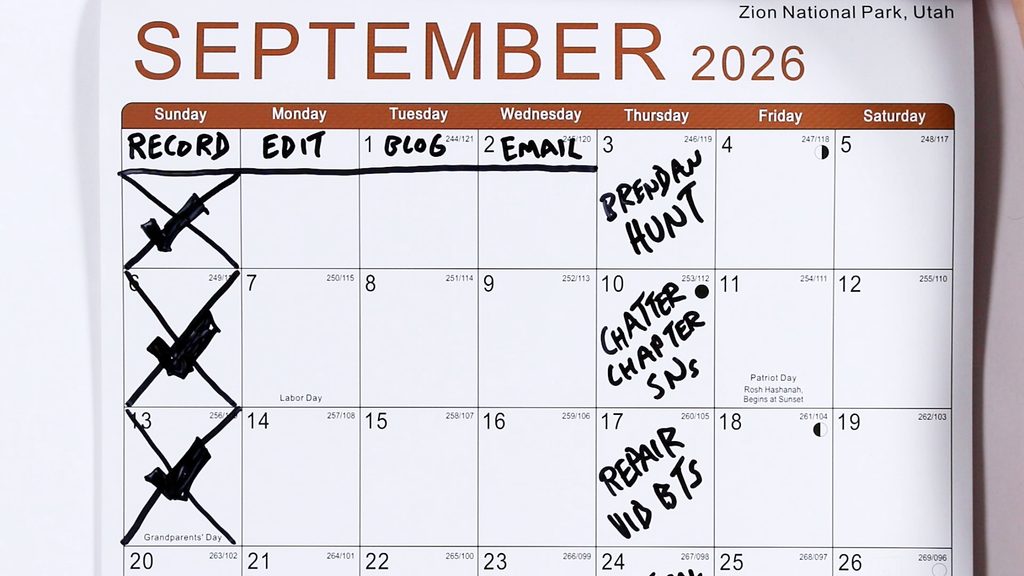
I’m using the four days before each Thursday to break video creation into four steps:
- Recording
- Editing
- Writing the blog post
- Writing the email newsletter
Each step gets a box that I check off. Along the way I played with the formatting. X’s made a day feel like it had already passed, so I switched to big, bold check marks.
Once all four steps are done, I circle the video to show it’s fully prepped. Once a day has actually passed, I highlight the whole box, using a different color each month to keep it fresh. That way I can see at a glance how much space there is between today and the videos I have ready to go.
Three buffers, big and small
To take a summer sabbatical, I’ll need to be about three months ahead. So I jumped to June 2027, marked the last day of school, and blocked out the sabbatical through just after Labor Day. Every Thursday from June 17 to September 9 needs a video made in advance.
Before that, I’ll get two chances to test the system. The first is right now. I’m moving out of the office I’ve rented for two years and into a home office I’m building on our property, so I recorded a handful of videos ahead of time to cover September (through Thursday, October 1). That turns this month into a mini sabbatical: less Verbal to Visual work, more property work. The second test is a two-week break over the new year. Hopefully those two runs work out the kinks before the big one.
This connects to an idea from Greg McKeown’s Essentialism: building a buffer, or creating breathing room between your current focus and a future commitment. That’s what I’m doing at three sizes: a one-month buffer in September, two weeks at the new year, and (fingers crossed) three months in summer 2027.
Reminders in the margins
The open Friday and Saturday columns on each page became space for reminders. September notes the home office build. November gets the word “slow,” paired with a buoy, the same image I used for the pause and break blueprint in my Sustainable Ambition sketch.
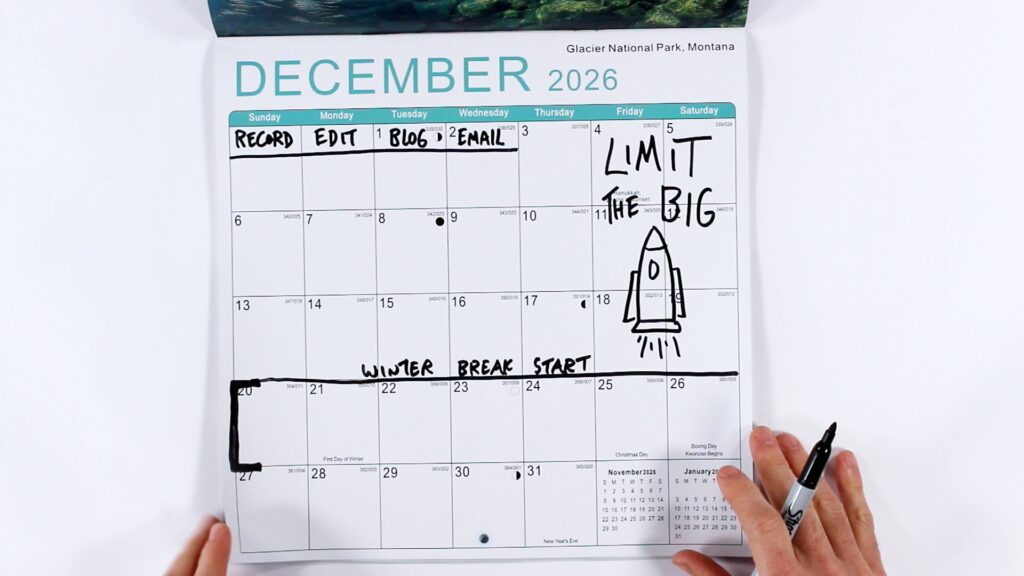
December holds a reminder from Slow Productivity to limit the number of big projects I take on, which feels timely during annual planning. January features walking footprints, my visual for the principle of working at a natural pace.
I stopped there on purpose. I want to test this process through the rest of 2026 before committing to a structure for all of 2027.
Your turn
What I’ve done here is take a familiar tool with a helpful visual structure built in, and layer my own formatting on top of it for a specific project. It tracks how far ahead I am, keeps key principles in view, and leaves room for drawing and doodling as I fill the pages. It’s a slow but steady effort to build some buffer into my work life and create space for the rest of my life.
Is there a familiar object you could use in a similar way? Maybe it’s a calendar, if you’re working toward something specific. Maybe it’s a themed poster on your wall that you mark up as you go, or a door painted with chalkboard paint that becomes a daily planning tool. How might you add visual structure to something you see every day, in support of the work that matters most to you right now?
For more support developing your visual thinking skills, check out our library of courses.

Within those complete-at-your-own-pace courses I’ll help you build your skills from the ground up and apply them to projects you care about in your personal or professional life.
Cheers,
-Doug