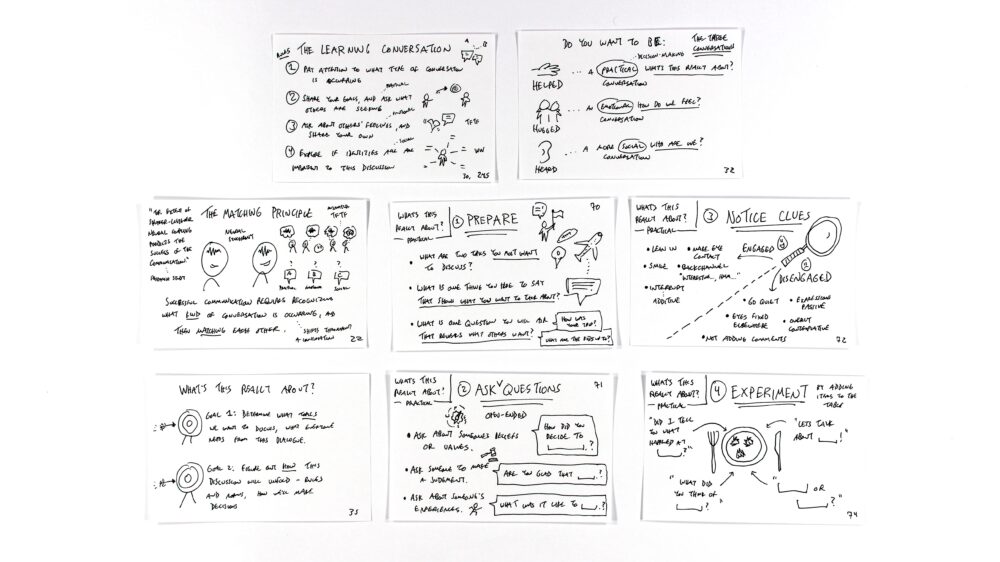
A visual note is more than just a record of what you read or heard. It’s a node in your personal knowledge network.
When you’re sketching out ideas from a book, a podcast, or a meeting, something interesting might happen: you recognize a connection to something else you’ve encountered before. Maybe it’s a concept from another book. Maybe it’s a framework you learned at work. Maybe it’s an experience from your own life.
That moment of recognition is valuable. And you can capture it.
Not with a hyperlink (we’re working with pen and paper here). But with something just as powerful: a simple reference that creates a bridge between this note and another piece of your knowledge base.
The Power of Abbreviations
In a recent workshop inside of Verbal to Visual, we explored how to mark these connections without disrupting your note-taking flow. The approach is simple: create short abbreviations for sources you reference frequently.
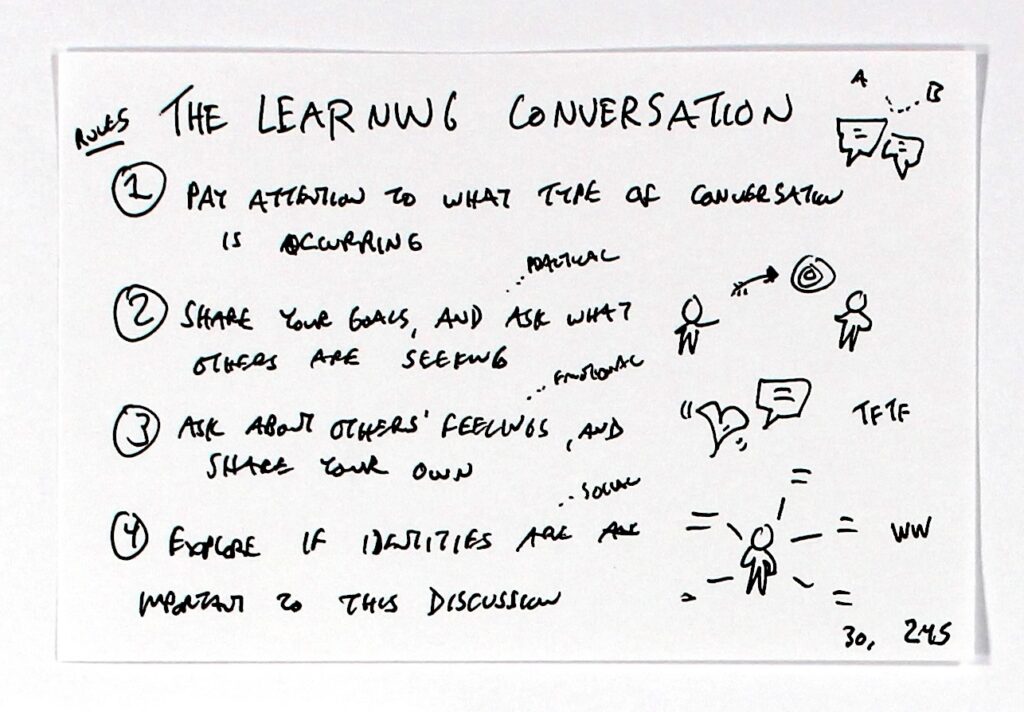
If you want to reference a book called Thanks for the Feedback, you might use TFTF. What Works becomes WW. The Extended Mind is TEM. These little acronyms can sit right next to the idea they connect to, maybe in a different color, maybe in a thought bubble, maybe just scribbled in the margin.
The point isn’t to be fancy. The point is to notice when ideas connect, and to make that connection visible.
Why This Matters
When you add these references, you’re doing something that goes beyond simple note-taking. You’re building a web of ideas rather than a collection of isolated documents.
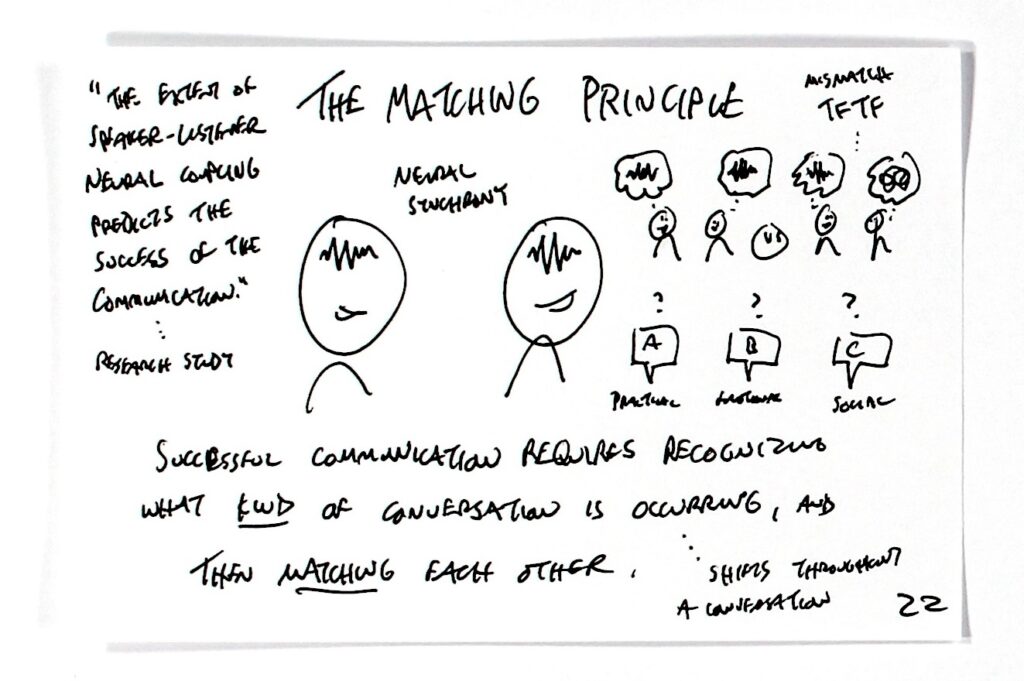
Each book you read isn’t a silo anymore. Each conversation isn’t a one-time event. Instead, they’re all part of a larger, interconnected system of understanding.
This practice also changes how you think while reading or listening. You become more alert to patterns. You notice when an author is exploring familiar territory from a new angle. You see how different thinkers approach the same problem.
That heightened awareness makes the ideas more memorable. Research on learning tells us that we remember things better when we connect them to other things we already know. By actively noting those connections as you encounter new ideas, you’re strengthening the neural pathways that help you retrieve that information later.
Different Types of Connections
These cross-references don’t have to point only to other books. During a discussion about this practice, several visual thinkers shared the different types of references they include:
Source-to-source connections: When one book reminds you of another, or when a podcast echoes something from an article you read.
Concept-to-experience connections: When an idea triggers a memory of when you saw that principle at work in your own life.
Question-to-question connections: When different sources raise similar questions, even if they don’t answer them the same way.
Disagreement flags: When you encounter conflicting perspectives on the same topic across different sources. One workshop participant mentioned using speech bubbles to capture their own reactions when they disagree with an author, a perfect place to note which other source supports your alternative view.
Keeping It Simple
The beauty of this approach is that it doesn’t require elaborate systems. You’re not building a complex index. You’re not spending hours cross-referencing everything.
You’re just pausing when you notice a connection, jotting down a quick reference, and moving on.
That’s it.
Over time, as these references accumulate, you’ll find that your notes become more than the sum of their parts. Open any page, and you might see connections branching out to three or four other sources. Follow those threads, and you discover a rich tapestry of interconnected thinking.
Making It Your Own
If you want to try this practice, here are a few approaches to consider:
The abbreviation method: Create short codes for frequently referenced sources. Keep a legend somewhere if needed.
The symbol method: Use small icons or symbols to indicate different types of connections. A small book icon for other reading. A lightbulb for personal insights. An arrow pointing to indicate “this connects to that.”
The color method: Use different colors for different types of references—one color for the source material, another for your connections to other sources, another for personal experiences.
The specific method matters less than the habit of noticing and marking connections.
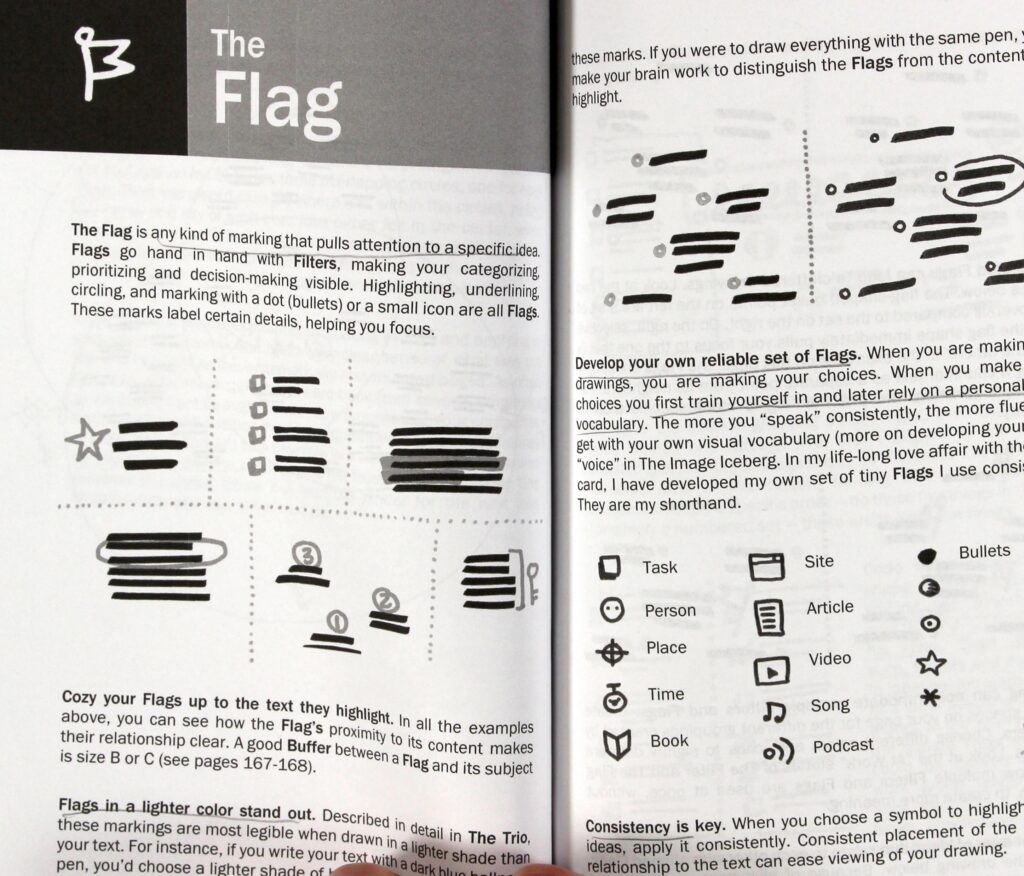
In her book The Idea Shapers, Brandy Agerbeck uses the term Flag to describe the use of icons to pull your attention to a specific idea, which could included references to other source material or your own thoughts.
Integration Over Isolation
The goal here isn’t to create a perfect, comprehensive map of all human knowledge. The goal is to shift from treating each source as isolated to recognizing how ideas flow across boundaries.
When you read your next book, try it. When an idea reminds you of something else, pause. Add a quick reference. Nothing elaborate. Just a signal to your future self: this connects to that.
Over time, you’re not just accumulating notes. You’re building a knowledge base where everything is in conversation with everything else.
And that’s when visual thinking becomes most powerful. Not when you’re making pretty drawings, but when you’re making connections visible.
If you’d like to explore more techniques for effective visual note-taking, come join us inside Verbal to Visual, where we regularly discuss practices like this in our weekly workshops.