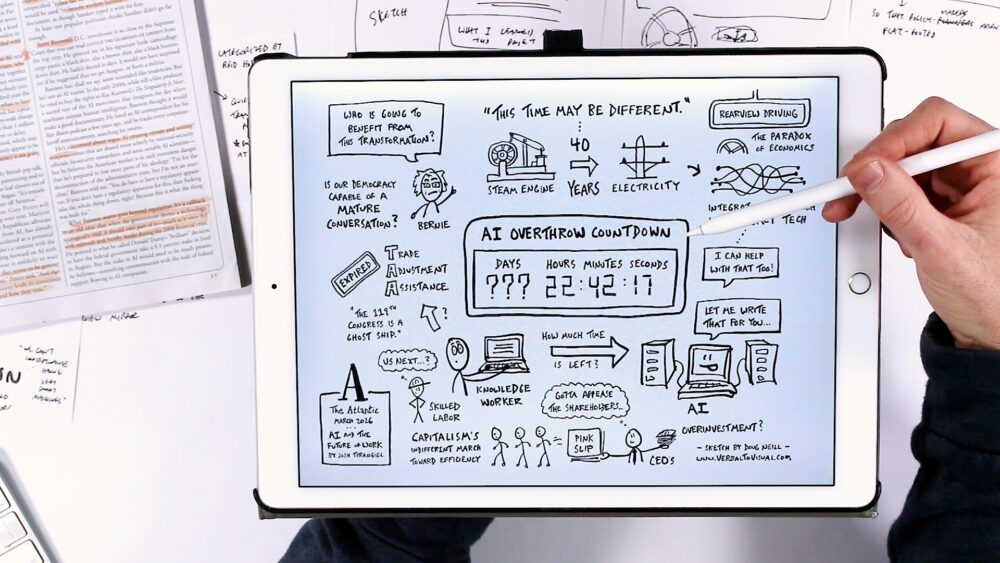
There’s a moment in every visual thinking project where the ideas are all sitting in front of you — on index cards, in underlined passages, scribbled in the margins — and you don’t yet know how to bring them together.
I hit that wall recently while working through an article about AI and the future of work. I’d done the reading. I’d pulled out the key concepts. I had a thumbnail sketch roughed out on a 4×6 card. But the composition just wasn’t clicking.
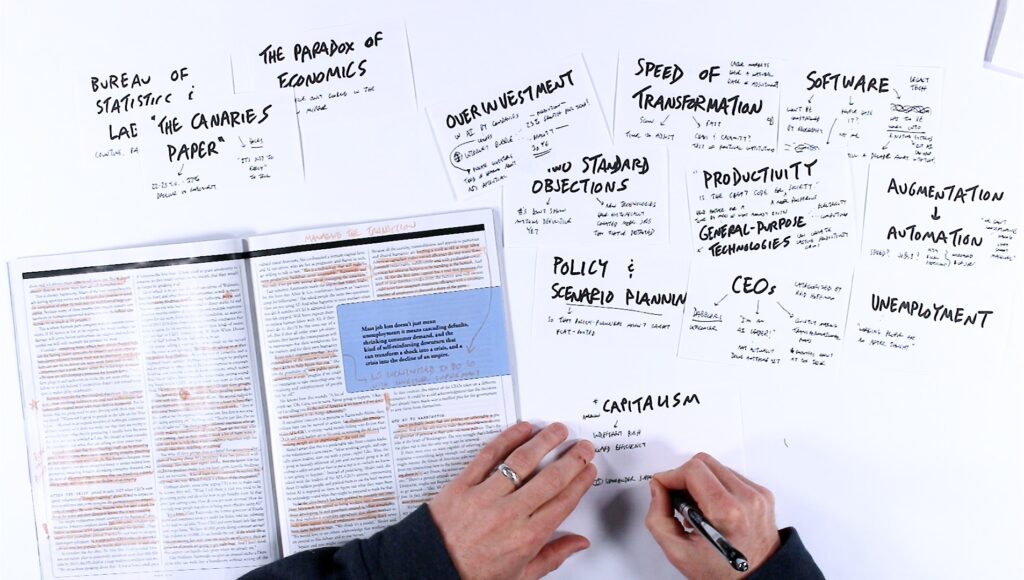
That in-between space is uncomfortable. You’ve done the thinking but you can’t yet see the model. And the temptation is to either force something that doesn’t feel right or abandon the project altogether.
What I’ve found is that when I get to that stuck point, two things help.
The first is stepping away. I let the ideas sit for a day. Not because I’m procrastinating, but because I’ve learned that the back of my mind does useful work when the front of my mind takes a break. A walk, a night of sleep, an unrelated conversation — any of these can spark the connection I was missing.
The second is being willing to rethink the structure entirely. In this case, I’d been trying to split the page diagonally, with past on one side and future on the other. It looked tidy in my head but it wasn’t serving the content. When I let go of that initial idea and explored a different anchor image (a countdown clock) everything started falling into place.
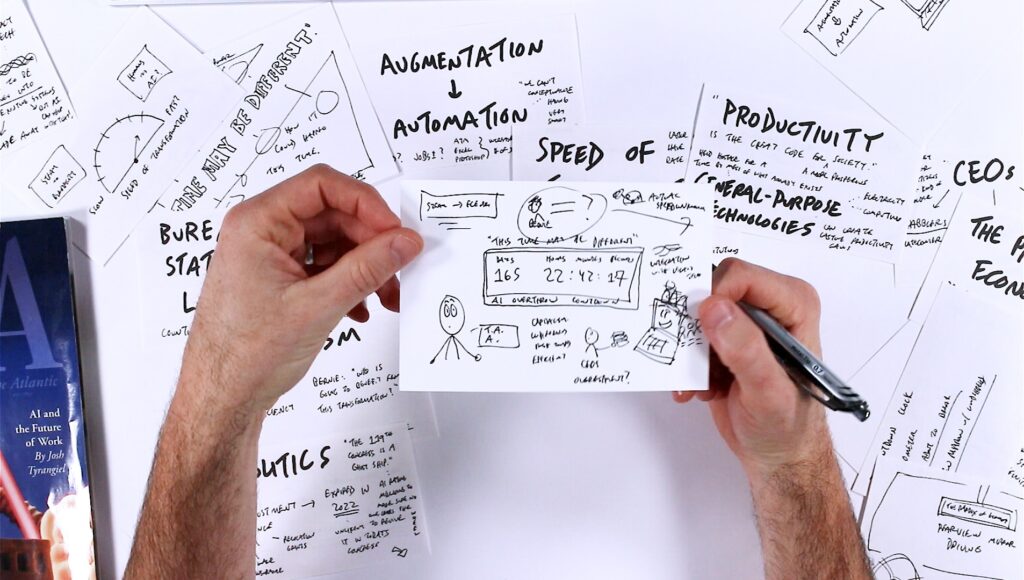
Here’s the thing I want you to take away from that: the process of visual thinking is rarely linear. You read, you capture, you sketch, you get stuck, you step back, you try again. And the final artifact almost never matches what you first imagined. That’s not a failure of the process. That’s the process working.
So if you’re in the middle of a sketching project right now and it feels messy or uncertain, that’s a good sign. It means you’re doing the hard work of synthesis: figuring out which pieces matter most and how they fit together. That’s where the real learning happens.
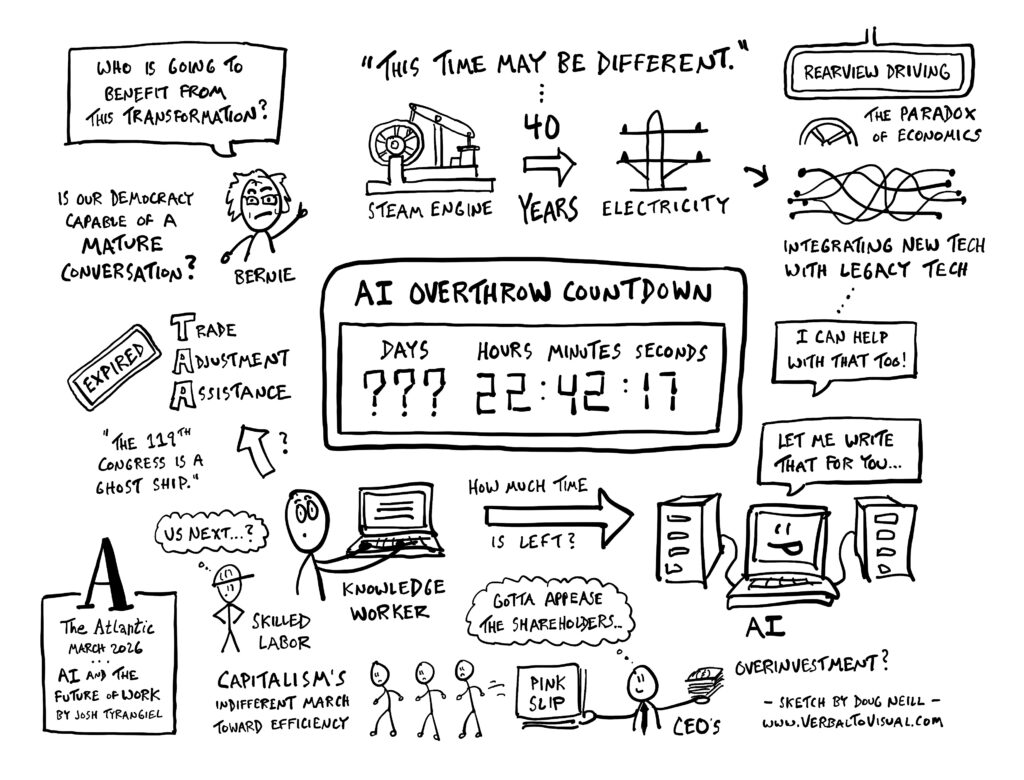
Don’t rush to a finished product. Give yourself permission to iterate. Try a structure, and if it doesn’t feel right, grab a blank card and try another.
The model you end up with will be better for it.
If you’d like support developing that kind of iterative visual thinking process, that’s exactly what The Verbal to Visual Curriculum is designed to help you with. It’s a set of lessons, methods, and examples (not to mention weekly live workshops) to build your skills from the ground up.
Cheers,
-Doug