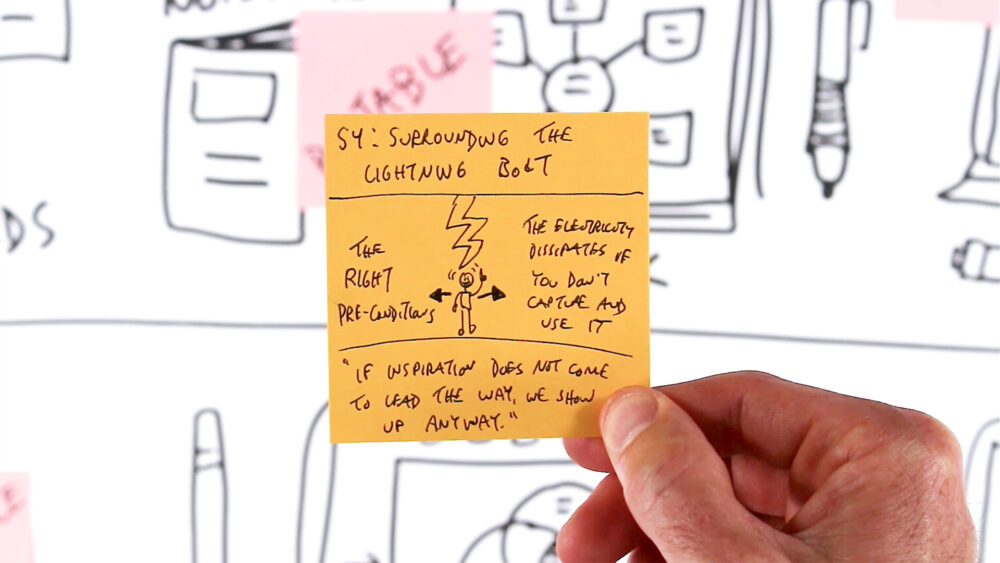
There’s a romantic vision of creativity that we’ve all been sold: the artist struck by inspiration, the writer consumed by their muse, the innovator hit with a flash of brilliance that changes everything.
The lightning bolt strikes, and magic happens.
But here’s what Rick Rubin points out in The Creative Act: that lightning bolt is worthless if you haven’t built the structure to capture it.
The Habit Before the Inspiration
“If inspiration does not come to lead the way, we show up anyway.”
That’s the key.
You can’t wait for inspiration to strike before you start building your capture system. You need to establish the habit first, on the days when inspiration is nowhere to be found, so that when it does arrive, you have somewhere for it to land.
For visual thinkers, this means having your capture tools ready: your ongoing journal, your sticky notes, your digital app of choice. It means showing up to the blank page even when you’re not sure what to sketch.
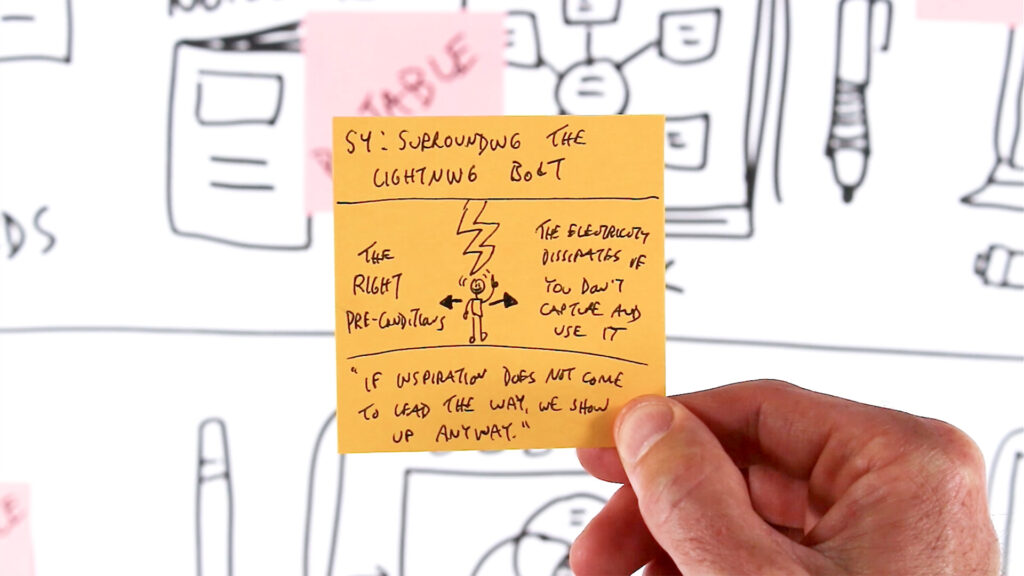
Because here’s the uncomfortable truth: “The electricity dissipates if you don’t capture and use it.”
Those insights you have while walking the dog? Gone by the time you get home if you don’t write them down. That perfect way to explain a concept that came to you in the shower? Faded by lunch if you don’t sketch it out.
The lightning bolt doesn’t care if you’re ready. It strikes when it strikes. Your job is to be there with the tools to harness it.
Building Your Lightning Rod
The precondition for making use of inspiration is simple: create a place for it to land.
This could be a composition notebook that lives on your desk. A pocket notebook you carry everywhere. A digital app that’s always one tap away. The specific tool matters less than the consistency of use.
What you’re building isn’t just a collection of notes. You’re building a structure that channels creative energy into something useful. You’re establishing the conditions that allow good ideas to become real work.
And on those days when inspiration doesn’t show up? You practice. You sketch. You capture whatever small thoughts are there. You keep the channels open.
So as you think about your own capture habits, consider these questions:
- What’s your go-to tool for capturing ideas when they arrive unannounced?
- How quickly can you get from “I just had a thought” to pen on paper (or stylus on screen)?
- Are there moments in your day when good ideas tend to show up, and if so, have you positioned your tools to be ready for them?
You don’t need a perfect system. You need a consistent one. Something simple enough that you’ll actually use it, and accessible enough that the friction between insight and capture is as small as possible.
Build the structure. Show up to the blank page. And when that lightning bolt does strike, you’ll be ready.
If you’d like to develop the visual thinking skills that make capturing and communicating ideas second nature, The Verbal to Visual Curriculum is a great place to start.
Cheers,
-Doug