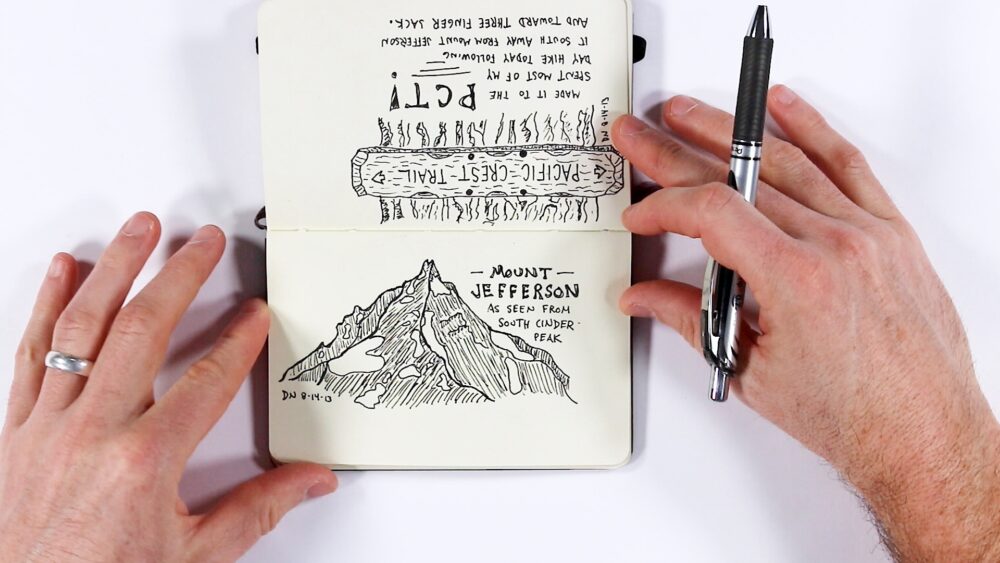
Anyone else have a bunch of filled notebooks on a shelf or in a box, but you don’t know what’s inside them?
That’s my situation with a stack of Moleskine notebooks that have been sitting around for years. In the first video of my Sketchbook Tour series (yes, it’s a series now!), I started fixing that problem by flipping through old sketchbooks and adding a table of contents to each cover.
Today I’m continuing that work with a notebook that contains daily drawings from 2013 and 2014.
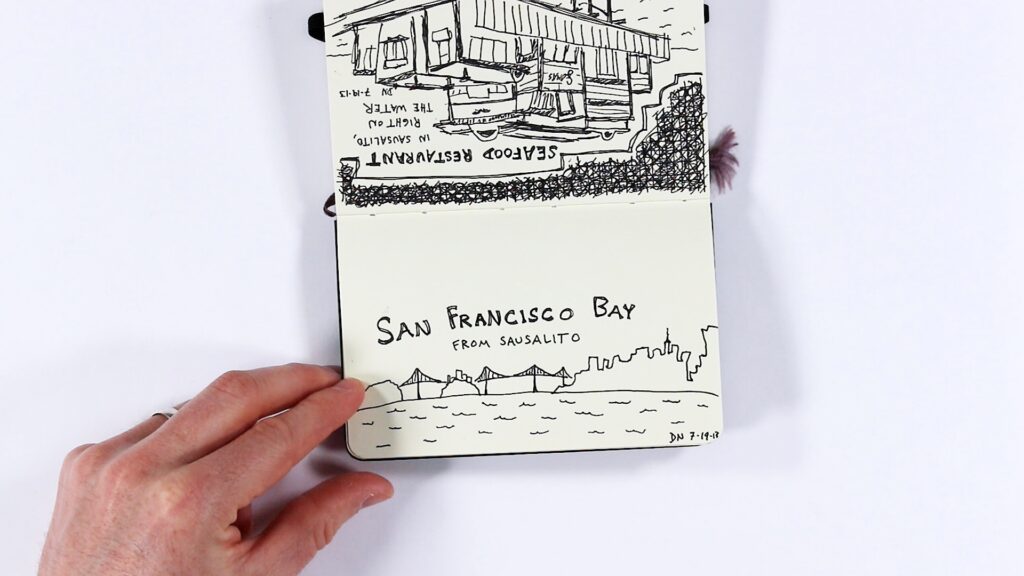
From a family vacation to San Francisco to daily life in Portland, Oregon to a road trip to Colorado, stopping once a day to draw something in front of me and write a few sentences about it created a record of my life over that time period that’s fun to look back on.
The Specificity of Individual Objects
What you’ll notice throughout those pages are more detailed illustrations than is typical these days in my visual thinking work. The way I most frequently approach my work now is with the goal of creating a visual model, sketching out some sort of a diagram or drawing that can serve as a container for a whole set of ideas.
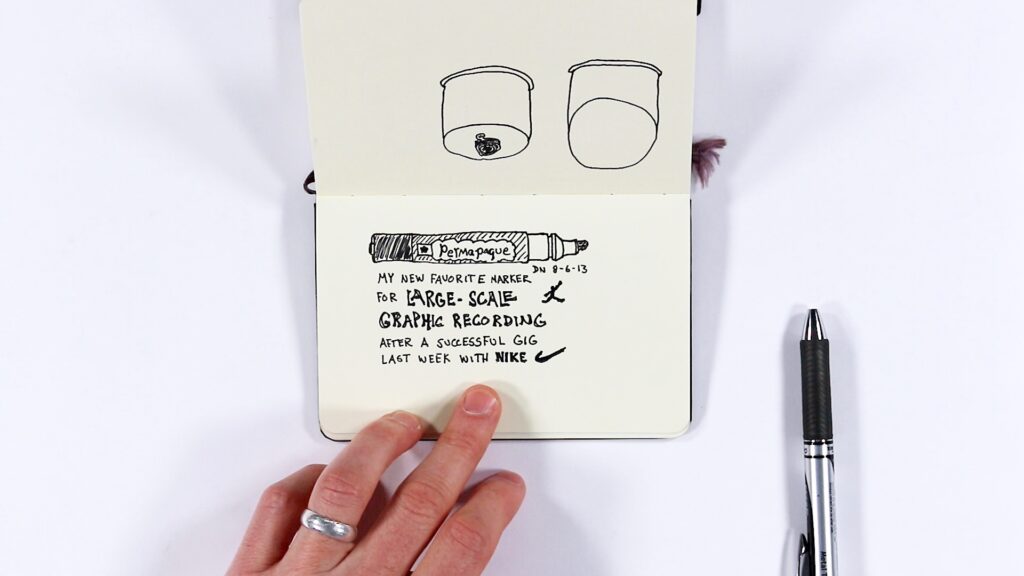
But individual objects, like a bench or salt and pepper shakers or a coffee mug, can serve a different purpose. You can use them as a visual metaphor, sure. But you can also use them as an entry point into a specific memory, or into a specific story.
For example, if I was capturing some details about the Beat Generation authors, I could have used my sketch of Cafe Trieste as an anchor to that scene.
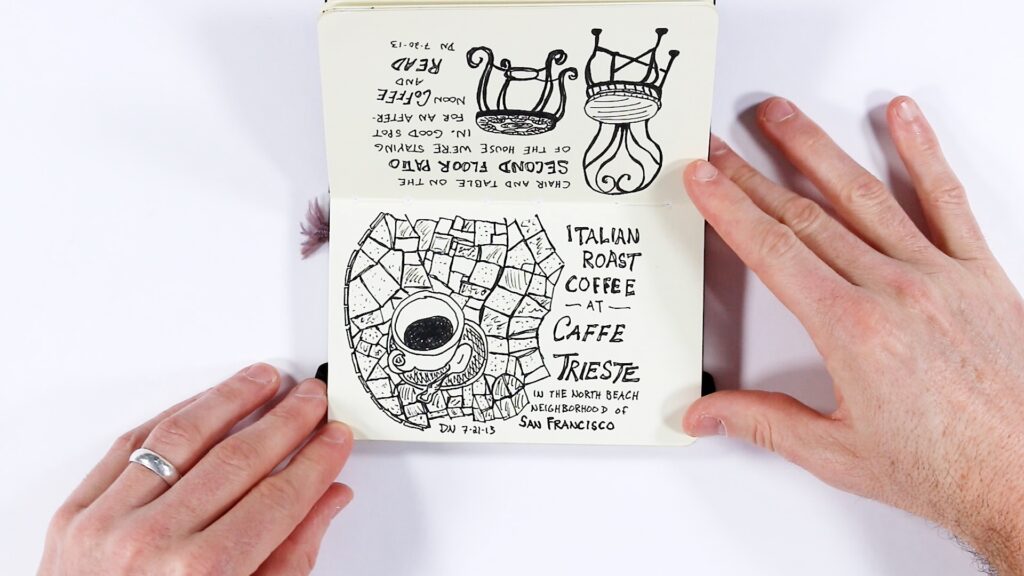
That’s a deeper level of specificity around individual objects. And that’s what a daily drawing journal can give you.
A Playground and a Laboratory
I once described this type of notebook as a playground plus a laboratory, and I think that framing still holds up.
First, the playground piece. I think it’s important and useful for you as a visual thinker to have a place where you can freely make marks, without it being directed toward a specific project with a specific objective. That kind of direction can bring pressure, because you have a place you want to get to. The nice thing about a visual journal is that there really is no destination. The whole purpose is to focus on the moment that’s in front of you, the thing that’s right there. Draw it to the best of your ability. Write a little bit about it. And then move on and do the same thing the next day.
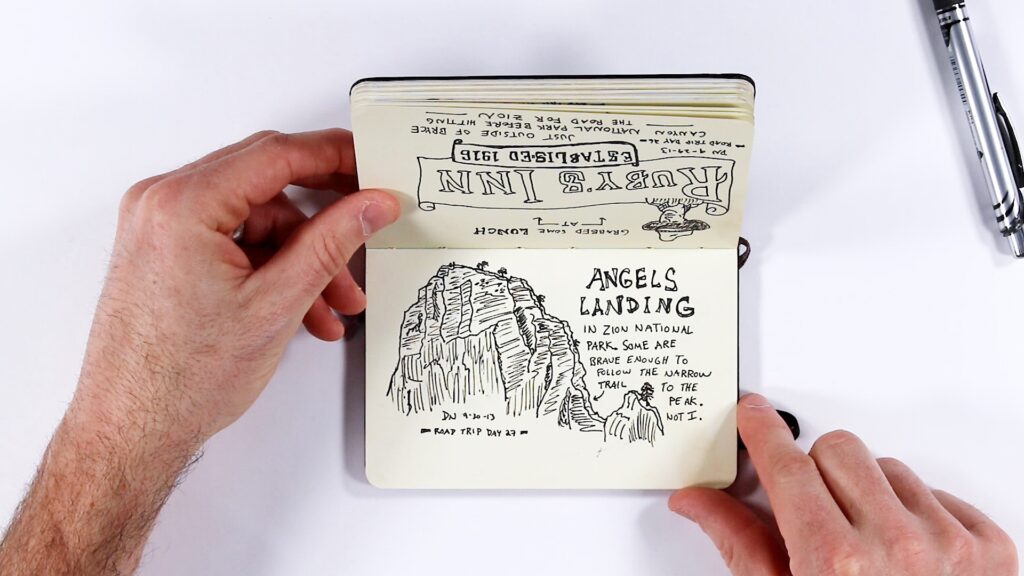
And then there’s the laboratory side. Your sketchbook is a place where you can experiment with different drawing techniques, different visualization methods, different tools, different pen styles, different color combinations. If you’re not particularly interested in doing detailed drawings, you could instead pick one thing you’re thinking about right now and capture it in some sort of a diagram. You could practice building mini visual models on each page.
When you do that daily practicing in a notebook, you then have some nice memories that you get to flip back through. You’ll likely remember where you were standing or sitting when you created those sketches. Those memories hit a little different when you’ve captured them by making your own marks on the page, instead of just snapping a quick photograph.
Give It a Try
If you don’t already have a place where you can do some playful and experimental daily drawing, find it. Pick up a small Moleskine notebook (I like the kind with thick pages) or go with one of those Field Notes–style books that’s even smaller and can fit in your pocket.
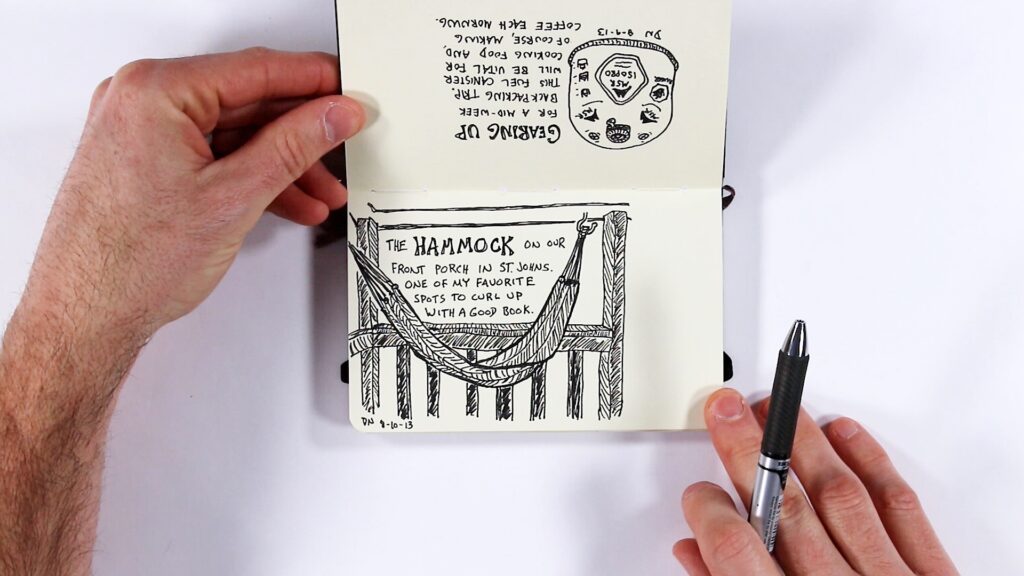
Then, at some point in your day, maybe during a time when you’d typically whip out your phone and scroll through social media, pull out that sketchbook instead. Look around you. Think about what’s going on. And make a quick sketch to capture that particular moment. I think you’ll find it to be a meaningful way to engage with the world around you.
If you’re interested in using your drawing skills not just for the purpose of visual journaling, but also for the purpose of learning, problem solving, and communicating interesting ideas, that’s exactly what we focus on inside of The Verbal to Visual Curriculum.
We’ve got a full set of complete-at-your-own-pace online lessons and weekly live workshops where you can ask questions, get feedback on your work, and be inspired by the visual thinking work of others around the globe.
As a thank you for spending some time with this article, you can use the discount code SKETCHITOUT for 20% off.
Cheers,
-Doug