There’s a particular kind of energy that shows up when you read a good book for the first time. You’re underlining a sentence that names something you’ve felt but never quite been able to put into words. You’re scribbling a note in the margin because an idea just connected to a conversation you had last week. Your brain is lit up, making connections, and it feels great.
And then, more often than not, that energy leaks away.
Maybe you finish the book and set it on the shelf, telling yourself you’ll come back to sketch out the key ideas later. Later arrives, and the spark is gone. Now you’re staring at a book full of underlines, trying to force yourself into the creative work of making a visual model, and it feels effortful, almost like a chore. You know there’s something worth capturing in there, but the excitement that would have carried you through has faded.
I’ve been thinking about this one a lot lately, because I don’t think that fading is inevitable. The move is to leverage the energy of the first read, to transfer the excitement of encountering an idea into a visual capture as quickly as you can, before it has a chance to dissipate.
Here’s what I’ve noticed in my own work: when I sketch out something short, like an article or a TED talk or a YouTube video, the whole thing tends to happen in one sitting. I read and I sketch in the same work session, so the energy of that first exposure flows right into the visual. But a book is bigger. It takes days or weeks to get through, and over that stretch the energy gets distributed and diluted. It’s much harder to focus.
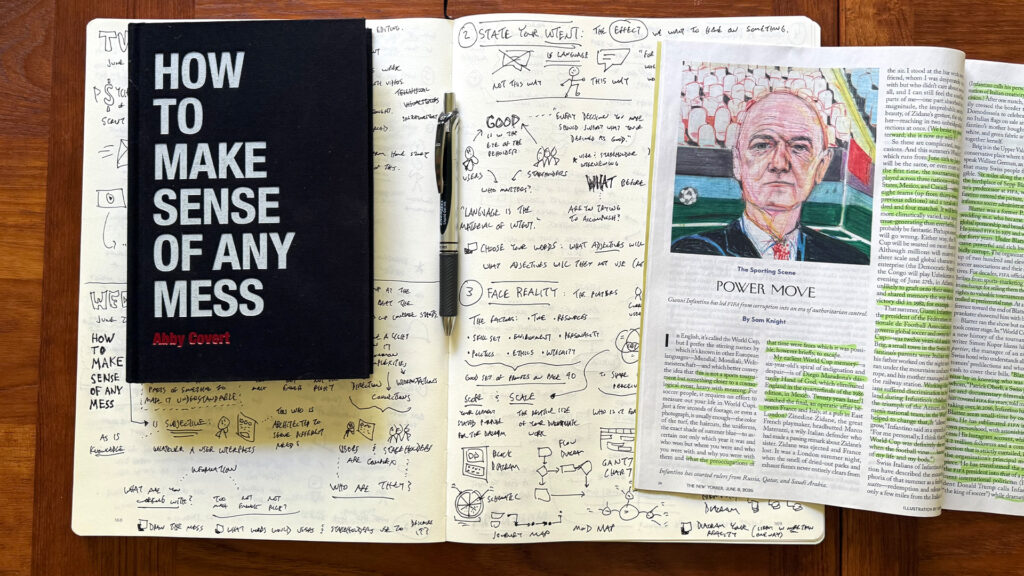
So rather than reading a whole book and then circling back to sketch all of it at the end, consider doing a little visual capture along the way, right when an idea excites you most. Stop at the end of a chapter. Notice the story or the framework that’s still buzzing in your head, and get a rough, quick sketch of it down on paper. You’re not trying to make it good. You’re just getting it out of your head and onto the page while the energy is still there to do the work for you.
Because that’s the real shift: when you sketch right after that first spark, the energy comes from the ideas themselves. You don’t have to manufacture it. Wait too long, and you’ll have to bring that energy on your own, and that’s the effortful, uphill version of the process that so many of us quietly avoid.
There’s a second energy source worth naming, too, and I have to credit community member Christine from yesterday’s book club session for pointing it out. She reminded us that the thrill of a first read isn’t the only fuel available. Your purpose for working with an idea is its own kind of energy. When you’re clear on who you’re making the work for and why it matters to you, that clarity generates momentum of its own, and it has the added benefit of quieting the perfectionist voice. It’s a lot easier to make a rough, imperfect sketch when you remember that the point was never a pretty picture. The point is the idea you want to hold onto, or the conversation you want to start with someone you care about.
This is really what the Collect the Pieces stage of The Sketch It Out Framework (from our course Make Models) is all about: quick, fun, exploratory capture, with no pressure to make it polished. Polish can come later, once you’ve got the raw material down.
So as you settle in with your next book, consider these questions:
- Where in your reading process does your energy feel highest, and are you doing anything with it while it’s there?
- What would it look like to pause at the end of a chapter and capture just the one idea that’s still buzzing?
- Beyond the thrill of a first read, what’s your deeper purpose for engaging with this book, and how might naming it keep you moving when the initial excitement fades?
You don’t have to wait until the last page to start making marks. In fact, the sooner you do, the easier the whole thing tends to be.
Sketchnote Book Club
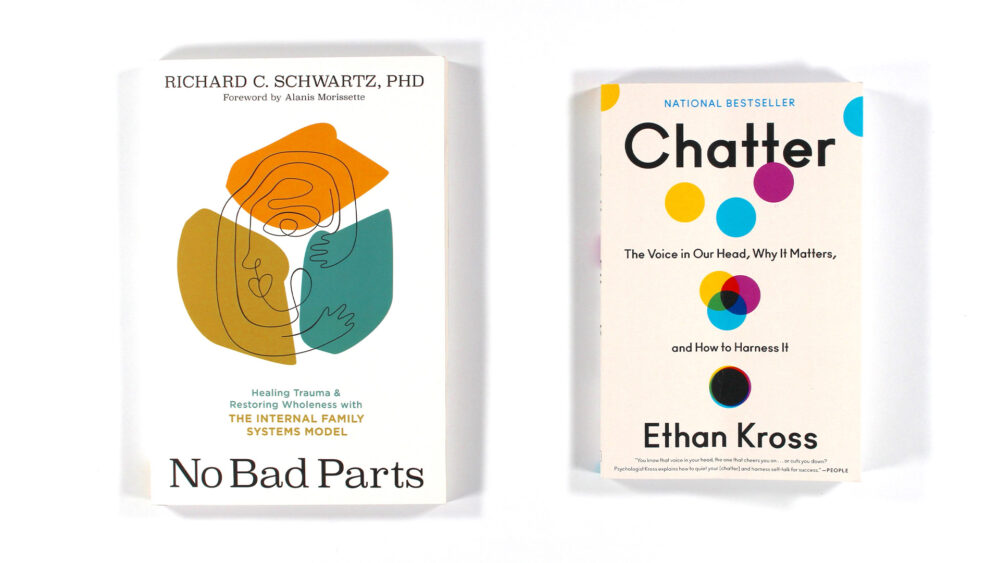
Within Verbal to Visual we just kicked off our latest book club, in which we’re reading and sketching No Bad Parts by Richard Schwartz and Chatter by Ethan Kross.
The replay of our first group session (from yesterday) is now available for current members. In that session I help you develop a plan for the reading and sketching process.
We’ll gather again at the end of August for a check-in, and then once more at the end of September for a show-and-tell event to share the visual artifacts you’ve created.
Those events are available for anyone who has picked up one of our self-paced online courses. So if you’re interested in building your visual thinking skills and applying them to a good book, then do come join us!
Cheers,
-Doug