There’s a way to spend unlimited money on an election without anyone ever knowing it was you. And it’s completely legal.
Step 1: The Nonprofit
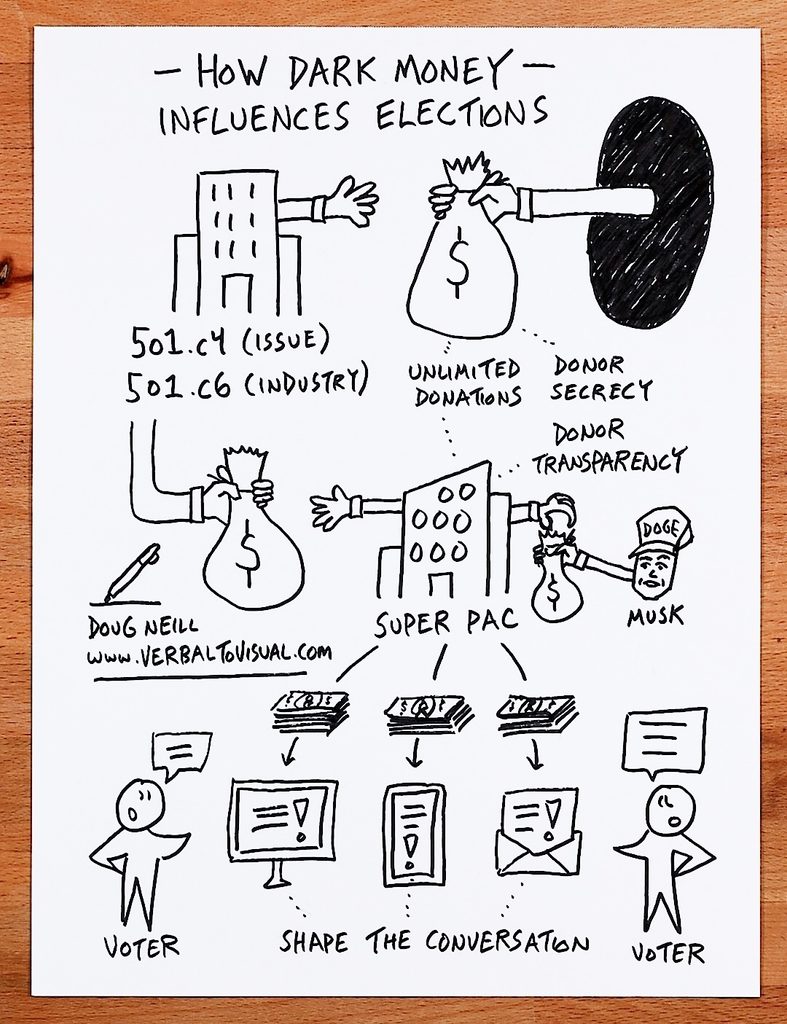
It starts with politically active nonprofits:
- 501(c)(4)s, which advocate for an issue
- 501(c)(6)s, which advocate for an industry
These groups can accept unlimited donations from corporations and wealthy individuals, with complete donor secrecy. That’s where the term dark money comes from.
Step 2: The Super PAC
The nonprofits then hand that money to a Super PAC. Super PACs can also take unlimited donations, but they do require donor transparency. That’s how we know Elon Musk has put almost half a billion dollars into this year’s midterms.
But when the donor is one of those nonprofits, all you see is the nonprofit’s name, usually something vague and patriotic-sounding. The trail ends there.
Both parties, Republicans and Democrats, are exploiting this system.
Step 3: The Message
The Super PAC turns that money into TV ads, social media campaigns, and mailers at your door, all designed to shape the conversations we have at the dinner table and in our communities.
There’s no cap on how much one donor can give, and no way to know who they are. But you can’t weigh a message if you don’t know who paid for it.
It Doesn’t Have to Be This Way
In the next video, I’ll cover the Citizens United decision and how states can get around it.
Want to help pick what I sketch after that? Join The Idea Board to vote on upcoming topics.