How do we raise kids who can handle hard things?
That’s the question that Kathryn Hecht explored in a recent TED talk, starting with the story of Sammy, a kid who was afraid of bees.
As a parent, it’s natural to want to protect your kids from their fears. Hecht calls that approach parenting for comfort, and she describes it as the single most natural, well-meaning, and deeply flawed thing that we do.
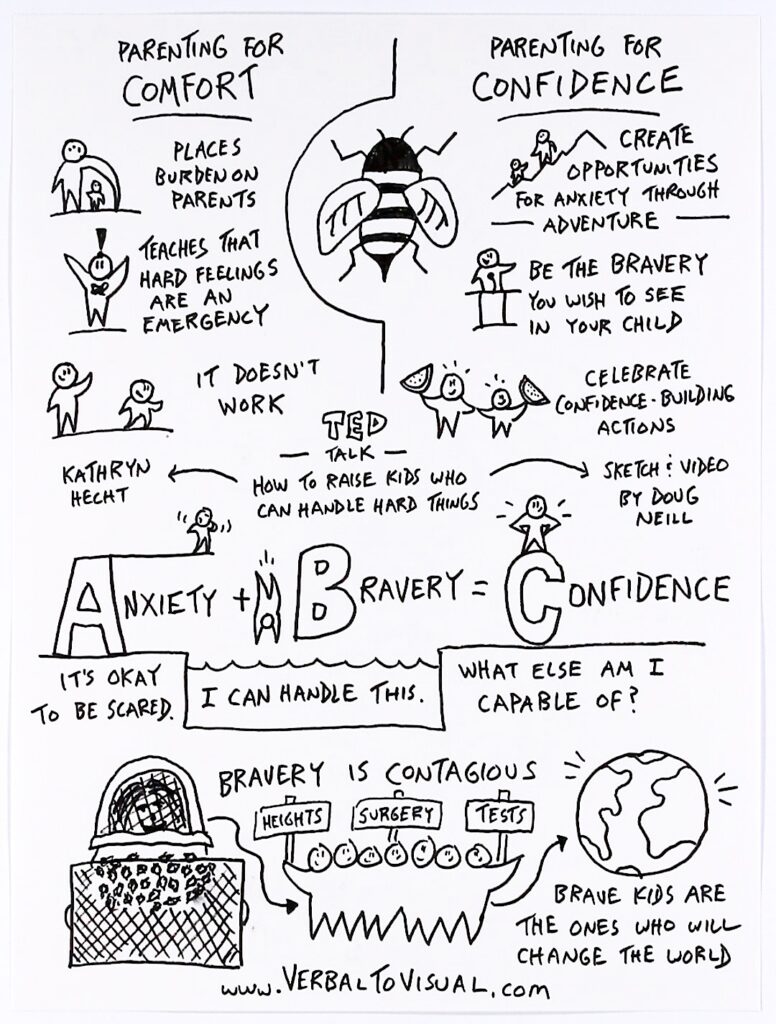
The Problems with Parenting for Comfort
First, it places an incredible burden on parents. You’re always in vigilant protection mode, attempting to control another person’s emotional experience.
Second, it teaches kids that hard feelings are an emergency. Every time you swoop in, you send the message that this feeling is a problem.
And third, it doesn’t work. When you send your kid off into the world, they will find that discomfort is a side effect of being alive. You’re doing them a disservice if you try to shield them from it at every turn.
So instead of planning indoor summer vacations to avoid any possible exposure to bees, what do you do?
A + B = C
Hecht proposes a simple equation:
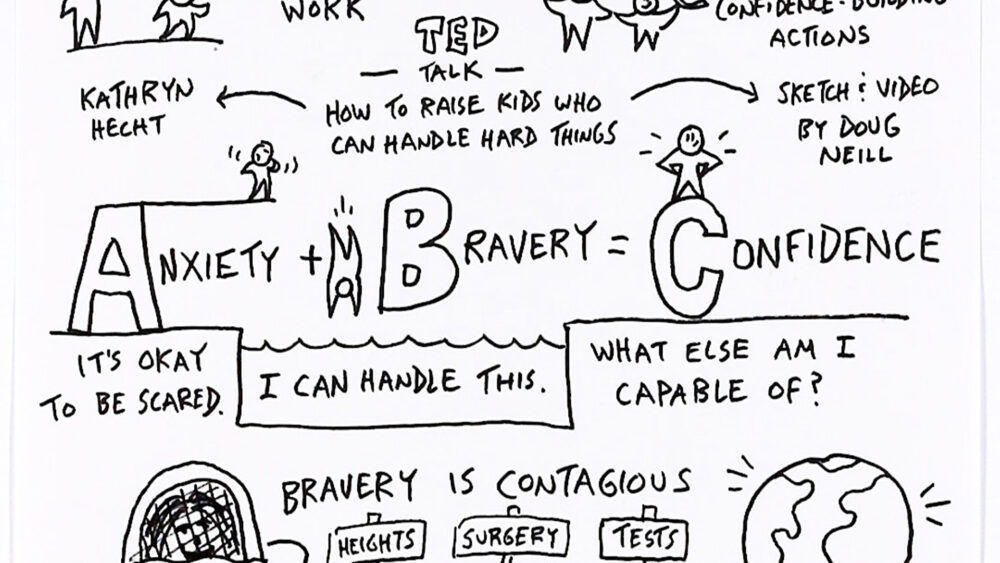
Anxiety + Bravery = Confidence
When you’re facing a situation that makes you anxious, you start by telling yourself: it’s okay to be scared.
Then you decide to act anyway by telling yourself: I can handle this.
And after responding to anxiety with bravery, you’ll naturally start asking a new question: what else am I capable of?
Anchoring your approach to those ABCs is what Hecht calls parenting for confidence, and you can support your kids at each step of it.
Supporting Your Kids Through the ABCs
Create opportunities for anxiety through adventure
Go back to outdoor fun in the summer. Create experiences where your kids might get a little bit scared.
Stay calm so that they can
By remaining calm in those situations, you help your kids stay calm. You lend them your nervous system and provide them with a steady anchor.
Be the bravery you wish to see in your child
Do the scary thing. That means the thing that your kid is scared of, but then maybe also the thing that you are scared of. If that’s public speaking, get up and share your thoughts at the next community event.
Celebrate the wins
Be sure to celebrate whenever confidence-building actions take place, even if it’s just a high five for enjoying watermelon outside in the summer for the first time in years.
Sammy’s Bravery Ladder
In Sammy’s case, the family followed those ABCs up what Hecht calls a bravery ladder:
- Bee pictures
- Bee videos
- A dead bee in a jar
- Real bees
And he kept it going from there, eventually donning a beekeeper suit and pulling honey out of a hive.
Bravery Is Contagious
Here’s the thing about bravery: it spreads. It makes other people feel more capable of tackling their own fears, which is exactly what we saw when a group of kids gathered on the stage to share the fears that they had overcome.
And this is not a trivial matter. As Hecht put it, brave kids are the ones who will change the world.
Confidence doesn’t come from praise or protection. It comes from practice.
Want to learn how to take visual notes like the ones you see here? Check out these resources.