If you’ve ever finished a great book and then forgotten 95% of it two weeks later, then this post is for you.
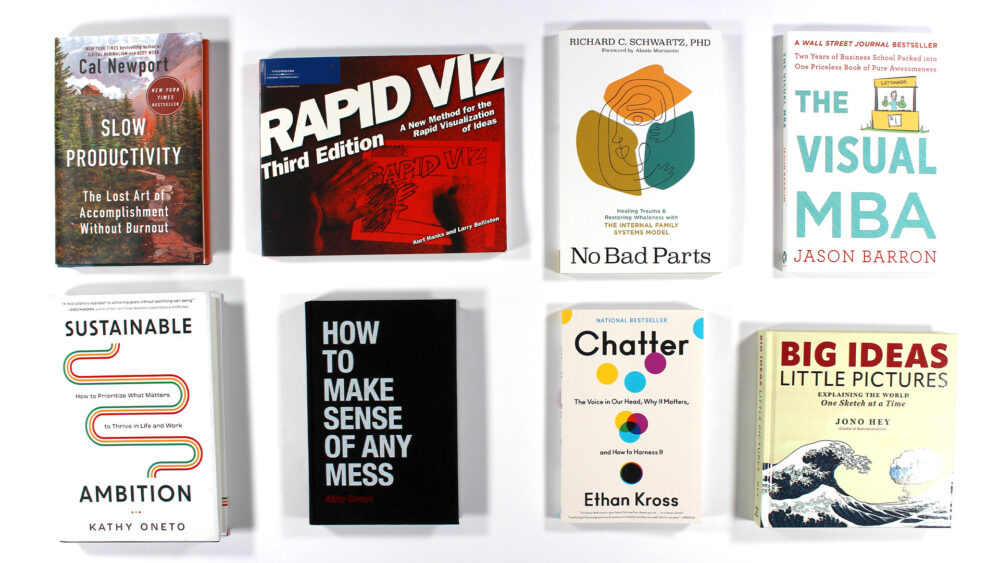
I’ve just announced the 2026 Visual Thinking Book Club selections that we’ll be reading and sketching out throughout the year inside Verbal to Visual.
Some of these books will stretch how you live, others will stretch how you draw and diagram.
Let me walk you through the lineup.
Quarter 1: Set Yourself Up for Success
We’re starting the year with Slow Productivity by Cal Newport and Sustainable Ambition by Kathy Oneto.
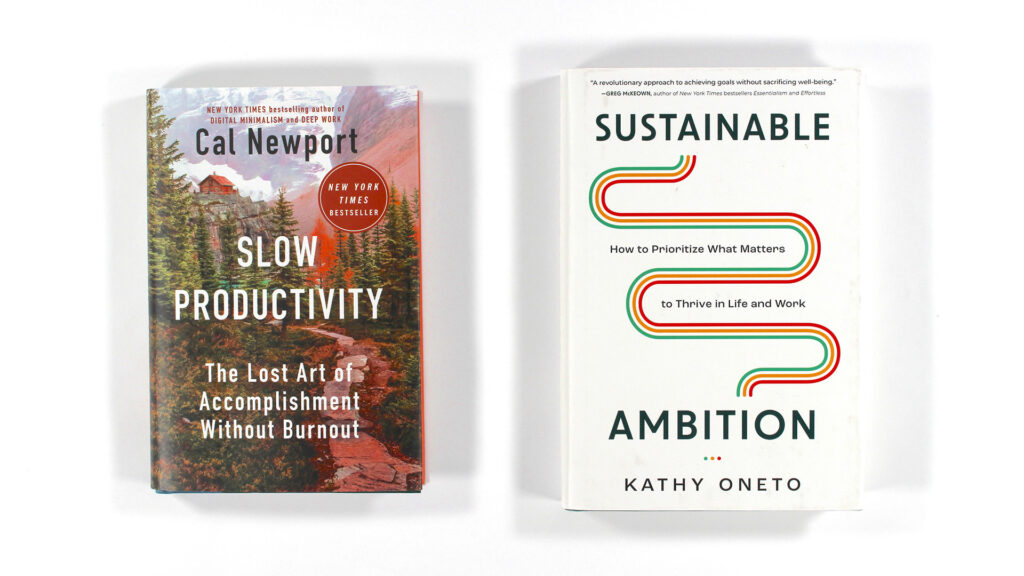
The goal? Set you up for the year ahead in a way that won’t lead to burnout.
I’ve been a longtime fan of Cal Newport’s work. You can find my visual summary of his book Digital Minimalism on my YouTube channel if you want to check that out.
And I consider Kathy Oneto to be a friend. I was a guest on her podcast last year, and I’ve actually already read and very much enjoyed Sustainable Ambition. But I haven’t yet sketched it out, so I’m excited to do that alongside you.
Quarter 2: Build Your Visual Thinking Skills
In the second quarter, we’ll turn our attention toward visual thinking skill building as we read Rapid Viz by Kurt Hanks and Larry Belliston, and How to Make Sense of Any Mess by Abby Covert.
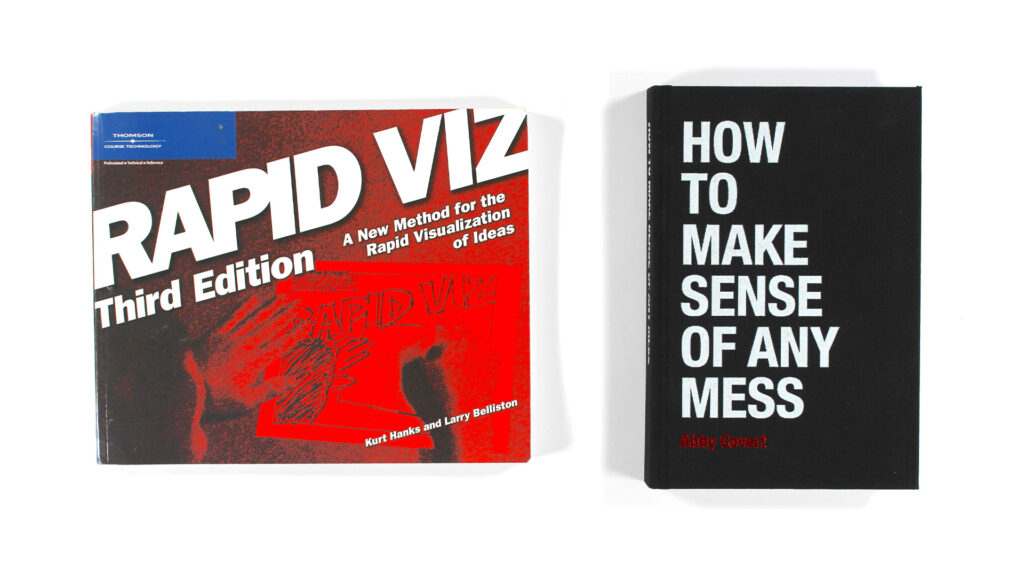
I’m excited about Rapid Viz because it focuses on how to quickly sketch out real-world objects, environments, and buildings. This is useful both as a planning tool (something I’ll be doing as I build a home office in the summer of 2026) and when creating visual metaphors for abstract ideas.
Then in How to Make Sense of Any Mess, we get to learn from Abby Covert’s extensive experience as an information architect. We’ll learn a process for wrangling complicated information—a core skill for any visual thinker.
Quarter 3: The Inner Game
In the third quarter, we’re going to focus on the inner game of life as we read No Bad Parts by Richard Schwartz and Chatter by Ethan Kross.
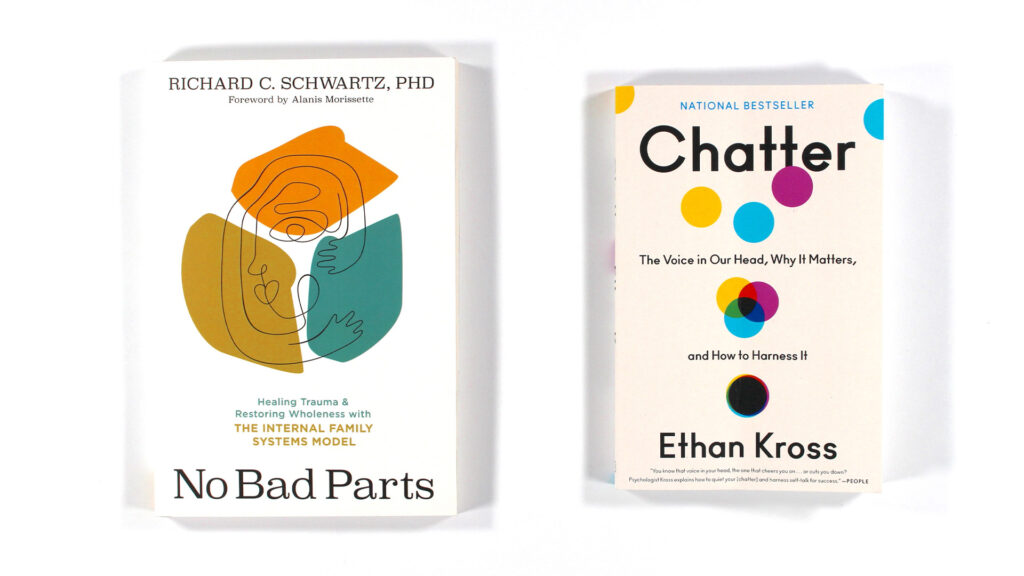
I’ve heard a lot of good things about the Internal Family Systems model that Schwartz teaches. My sense is that it’s a useful framework both for those who have experienced big T trauma and those who have experienced little t trauma that comes along with modern life.
Then in Chatter we’ll explore the voice in our head, why it matters, and how to harness it. The impact of how we talk to ourselves is often so much greater than we realize, especially for us within a skill-building community where we’re challenging ourselves to try new things that might not work.
Quarter 4: Visual Thinking in Action
And then in the fourth quarter we’re going to look at visual thinking in action as we read The Visual MBA by Jason Barron and Big Ideas, Little Pictures by Jono Hey.
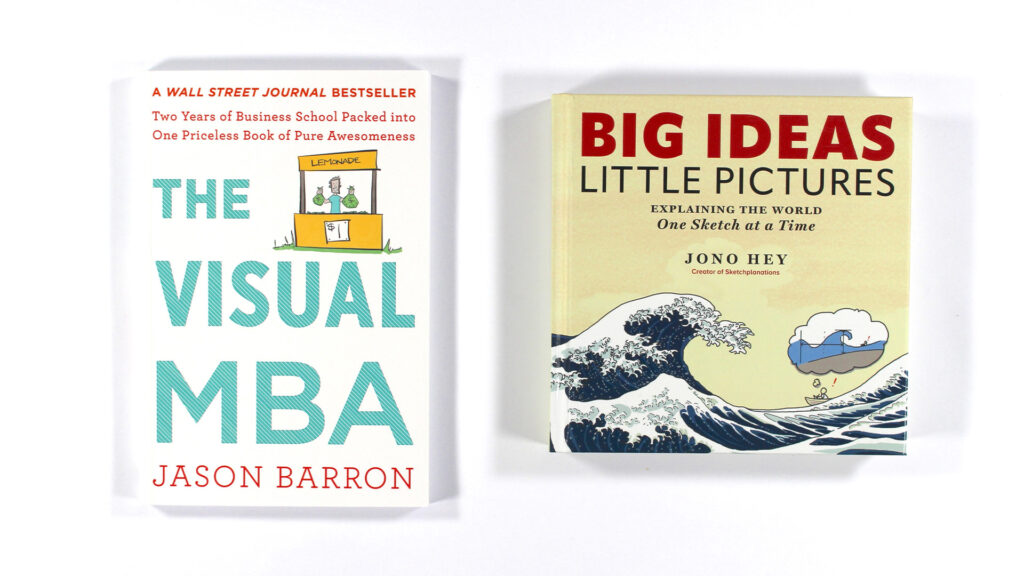
Here we’ll be reading books that employ visual thinking as opposed to teaching it. As we read, I’ll be encouraging you to look out for techniques or styles that you might want to try on in your own work.
How It Works
These book club events take place inside Verbal to Visual, our online learning community for visual thinkers.
We’ll meet via Zoom on the last Thursday of each month at 9:00am Pacific Time. In those events I’ll set you up for success at the beginning of each quarter, and then you’ll be able to share your progress, reading and sketching your way through those good books.
You don’t need to read both books every quarter—it’s probably best if you just pick one to focus on. But we’ve found in past years that it’s been really interesting as a community to have two books to explore, compare, and contrast.
Come join us!
Here’s to remembering what we read in 2026.
Cheers,
-Doug